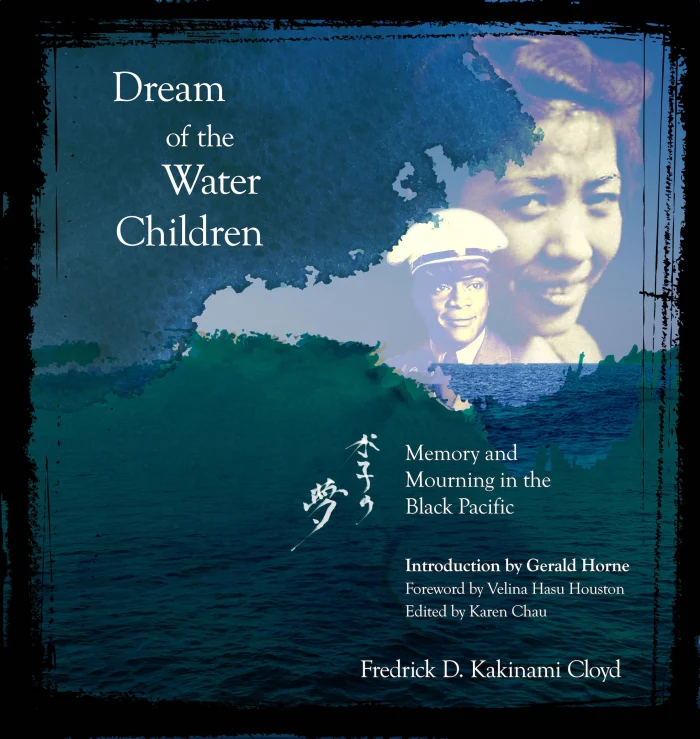
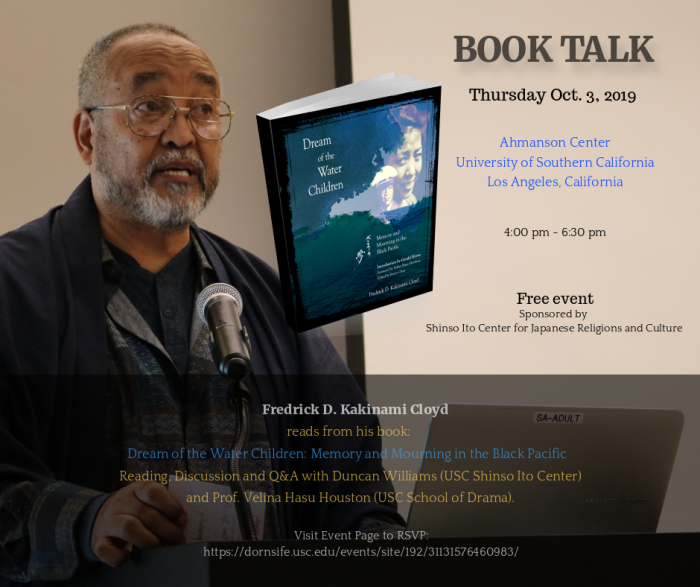
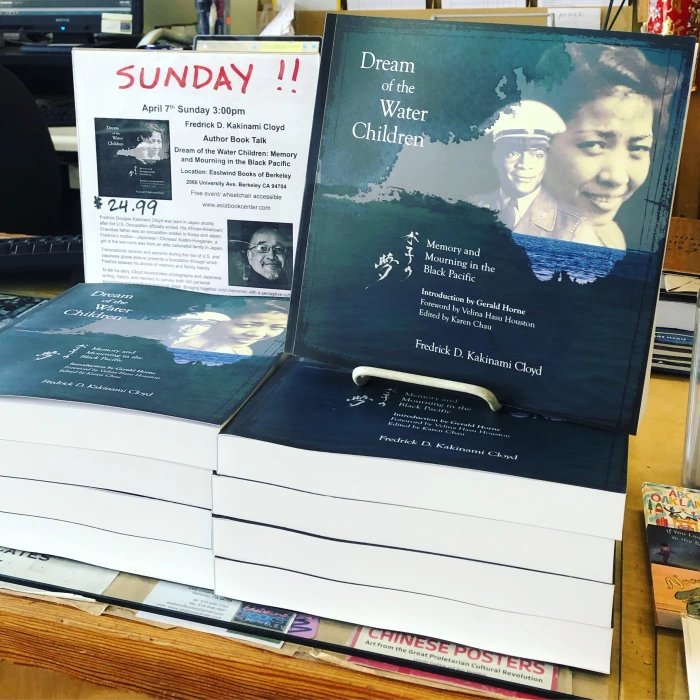
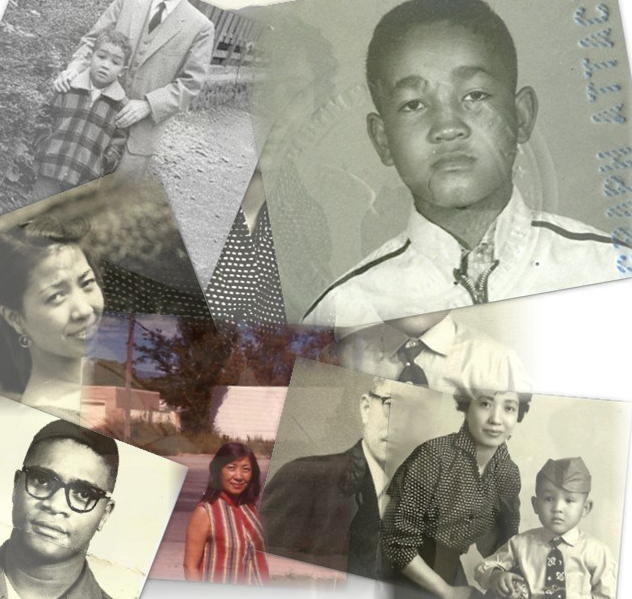
The contours of colonialism and cultural identity, along with socio-economic class and discrimination, create the uneven and violent relations within nations. Citizenship is only a paper-worked body-armor when it lives everyday in social relations anywhere.
Citizenship is hierarchical, violent, oppressive, and only live-able and do-able in any association to ‘happiness’ or ‘democracy’ by the privileged in social relations. These social relations are created psycho-socially, historically and through power-relations and the discourses of truth and identity playing out in the fragmented social fields that are our (post)colonial condition today.
Pinayism has provided a short psychological structural analysis of how discrimination against Amerasians in the United States and the Philippines creates itself and acts through people. It probes the process through which ‘other-ing’ and entitlement to violence and condescension plays out.
In examining the structures, we begin to finger in and expose pathways to a freedom that is not escapist or reactionary.
I think it is a good general beginning analysis of mainstream/vs. mixed subconscious and conscious acts everywhere, not only toward Filipino/a Amerasians.
Just to let people know—I am still working on this blog, but I am also working on a couple of large projects which are taking up my time/energy. I have more coming soon.
Stay tuned! I hope you read/see/reflect on my other posts that you haven’t seen yet.
It is a fictionalized account of real-life events in the first year of the US Occupation of Japan, where there was an investigation on the Emperor of Japan and the question of accusing the emperor as a War Criminal.
The movie does not get into the overall politics, history, or larger events surrounding the bombings or surrender or the administration of the occupation, but focuses on General Bonner Fellers (played by Matthew Fox) who was hired by Commanding General MacArthur (played by Tommy Lee Jones) to be the chief investigator of the fact-finding mission to determine if the US War Crimes Tribunal had cause to charge Japan’s Emperor Hirohito of War Crimes.
Rather than get into the particulars of the movie, the overall impression I came away with were that bigger questions should have been addressed in the movie, in order to give it more depth. However, the movie does an interesting and effective job of bringing up uneven positions of authority, racial prejudice, secrecy within the Occupation’s tasks and who knew or did not know certain things, and interracial marriage. It’s done in small spaces, nothing grandiose.
The underlying liberalism of the main characters, in their diversity of personalities, plays out against a semi-main character who is eager to condemn the emperor of Japan and displays his racism against the Japanese openly. This is a typical depiction of racism in these scenarios, where it is viewed as a ‘bad guy’ thing, while Matthew Fox’s character is the ‘good guy’ in ethical dilemmas. This is the typical depiction. There was no room, really to really critique the occupation in this movie, unless one studied and knew other facts. There were also many good things the Occupation did (like allowing women to vote in Japan), as well. It is truly complex.
It was not the movie’s job to make a million statements and give a history. In fact, in the political climate these days, any critique of occupation, seriously, would not have been allowed, really. Or perhaps they would not find the sponsors to fund the movie. The movie must be palatable to American patriotism, liberalism, and present problems as individual dilemmas. Any social examination on a large scale would mean educating people on the history of the war and its development, social relations between many groups, etc. etc. and the role that Europe and the US played all across the Pacific from colonization to today. This dilemma is ongoing. This movie covered one tiny subject in a host of explosive historical power plays.
In addition, the scene in the bar in a burnt-out Japan, where young Japanese men chide and bully Fellers, brings up a different kind of picture of the so-called ‘peaceful’ occupation of Japan after the war–which is the most often quoted description of that Occupation.
In Japan, and among many WWII veterans that I have emailed with, and through many articles I have read, it seems there is heated debate about the Occupation after people have seen the movie. I think that heated debate is healthy. Many silent things are sure to surface.
There is much pain, violence, and issues of victory and defeat and globalization that are at the heart of these discussions. History, which is written by the victors–in this case, the US, has two or three main versions. On the Japanese side, there is usually one variation–written by those who worked with the Occupation elite and the new government of Japan. These included the right-wing war-mongers of Japanese nationalist parties who were let out of prisons and given high positions in Japanese government (one became a prime minister). The US handled all of this through the Korean War.
The Zainichi Koreans, as well as Koreans in the Peninsula, were first elated when the Japanese lost the war, because of Japan’s brutal policies in colonizing and ruling Korea. This elation was short-lived as the US Occupation ordered the same administration to stay in place in Korea. Zainichi Koreans continued to be oppressed structurally and socially, in Japan.
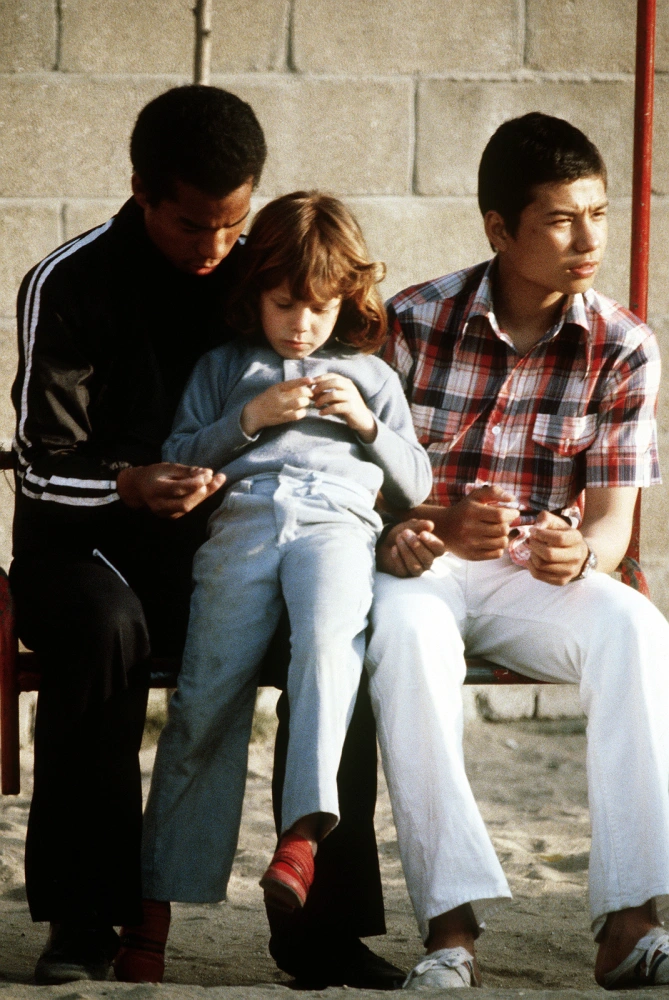
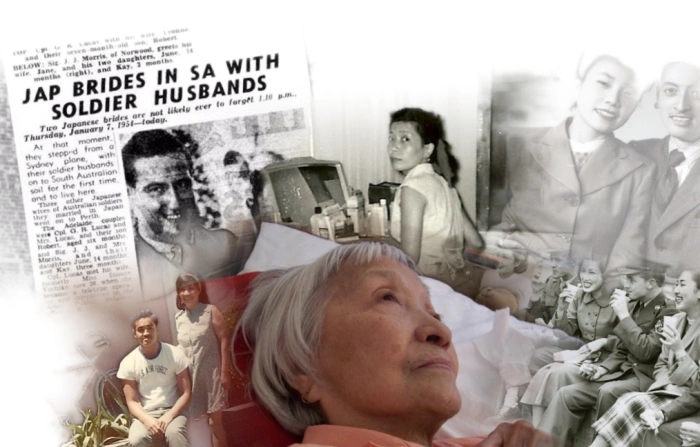
Not to exclude the other social issues–such as those which concern me–the children of the US soldiers and their mothers, who were left to fend for themselves in Japan. After a brutal war, where 66 of your major cities have been bombed to the ground (yes, Hiroshima and Nagasaki were not the only destruction of Japan in the war), children of the former enemy were not looked upon with love.
But these issues, among so many others, were not in the movie. I did not expect it. Movies cannot cover everything. Nothing can cover everything. This is only a movie.
For a snippet, it was not a bad movie. Pretty decent acting. Special effects were well-done, depicting postwar Tokyo in its devastation, and the very arrogant-seeming American white people running around Japan, doing as they want. This was pretty much the way it was, the way I remember it as a child.
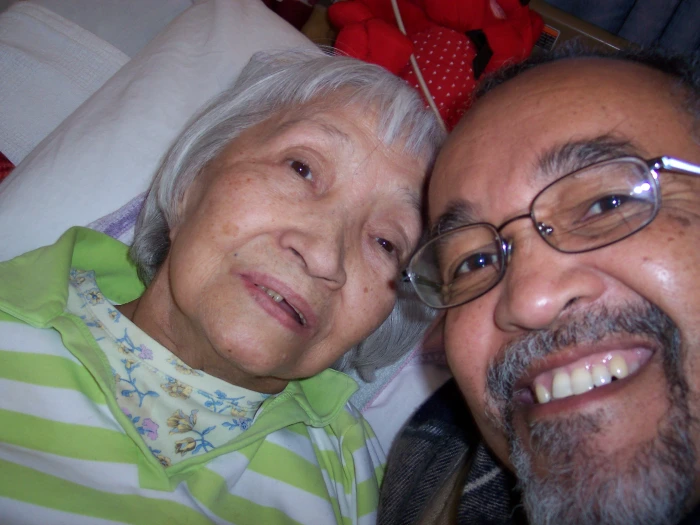
I wish my mother were still here, to perhaps see the movie together. But she probably would’ve said ‘no.’ She would hardly ever want to talk of those times, and she never enjoyed anything depicting Japan before, during or after the war.
I am glad I saw this movie. I just wish others were more interested in these parts of history.
Aisha Fukushima is a Black/Japanese=Blackanese Poet/singer/rapper/activist=Raptivist educator based in the San Francisco Bay Area in the USA.
Her work brings together global hip-hop styles and language, and anti-racist, anti-sexist activism in a way that crosses national boundaries.
Excerpt from her website:
‘Over the last 8 years, Aisha’s passion for empowering young people through the performing arts has led her to build educational programs such as Turn Off The Stereotypes (2005), Whitman Institute of Summer Enrichment (2006) and SISTARZ, an all-girls hip hop club (2012). She has also been honored with a number of prestigious fellowships for her work from institutions such as Duke University’s Institute of Summer Enrichment, Humanity in Action’s European Program (The Netherlands) and the Thomas J. Watson Foundation.
Aisha holds an honors degree in Rhetoric & Film Studies from Whitman College (2009) with minors in French Literature & Gender Studies. She currently lives in the California Bay Area where, in addition to performing, she works with youth everyday through the San Francisco Unified School District and the Performing Arts Workshop. She also regularly speaks at universities and conferences throughout the Bay Area and recently returned from two international performance lecture tours Japan and Kazakhstan (respectively) with the support of the U.S. State Department. Aisha is fluent in French and building proficiency in Japanese, Arabic and Wolof.’
‘There are many ways to work to create change in the world. Also, the trajectories of identity-markers make for particular ways of making use of our capacities and talents toward social change and anti-oppression work.
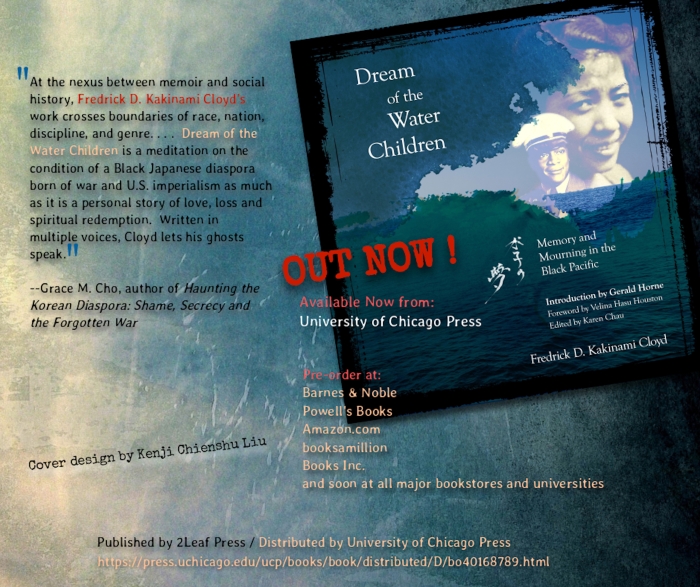
In my case, it comes from living in Postwar Japan and the United States, as a military child, as a man, of a certain kind of relationship to time, place, nation, gender, culture, race and racialization. My work does not concentrate on the US-American contours of race, because I speak with a relationship to living in Occupation-Japan just after the Korean War, to the history of race-making and nation-building in relation to living in the 1950s and 1960s as a child and teenager in the US and Japan.
Also, I grew up in Japan, with my first years largely without a father, off of the military bases and in a town outside of Tokyo proper facing Japanese racisms, then on military bases, protected but encountering new American racisms. Inside/outside, military life, Japan and its changes from post-World War II to today. My relationship with my mother was solidified in these times, more than with my father, which poses certain perspectives regarding a way to be in the world as a man-of-color.
In addition, my own searches brought my journey later in life (in my 40s) to academia. Before this, was my training and life-saving movements in Zen Buddhist monastic training. These inform my ways as educator.
Even as Aisha Fukushima speaks to the world from her perspective and I speak to readers of this blog or at my numerous talks, or on my websites and YouTube channels and at talks at academic conferences and art shows, our intentions, as persons seeking justice and memory and empowerment and understanding, are alike. She speaks to mostly a younger generation of people, who have been raised in far different relations to WWII than I, who speak of their particular experiences and work in certain ways in resistance and harmony. I speak to an older, transnational generation closer to WWII, the Korean War and the Vietnam wars. However, there are parallels as well as differences. This does not detract from our message.
Each word, phrase, identity, history, is different, but the pain, the needs, the longing, are somewhat alike. There, activists for social change and democratic empowerment and understanding, are alike–sisters and brothers.
When dominant nations unconsciously or consciously speak of, imagine, and create words and images and feel something in regards to an “other”, terms such as: exotic, erotic, jealousy, mystery, fear, violent disgust, attraction, desire, mimicry come up. These are all evoked in Japan and the dominant white nations (US, UK, Canada, Australia, France, Netherlands, Norway, Denmark, Sweden, Germany, Austria, Luxembourg).
The boundaries of nation and national culture are solidified by this creation of the other. It is not only imagery and prejudice however. And prejudice is not always the old kind of name calling and ‘hate.’ Sometimes it shows up in other ways traditionally not thought of as “prejudice” or “race hate.”
In the globalizing era, the United States and the UK are the most dominant in the spread of Black imagery and imaginations around the globe. This is due to colonial, neo-colonial power. Economically, politically and militarily, the US and UK have had the longest and widest histories of successful forms of cultural-political dominance.
Various kinds of ‘Black’ people have existed in Asia for centuries before contact with the US in the World War period. There has been widespread travel and contact between the many lands, including what is now called Africa, where black bodies were the norm.
Today, however, the spread of images of ‘black’ violence, poverty, and criminal behaviors have linked with previous European race science and time/space notions of primitiveness vs. progress, making condescending notions of assimilation to modern civility as the norm in response to so-called “negative” images of Black people, bodies, and what is now becoming increasingly a “black culture.”
This “black culture” is a homogenized notion controlled by US hip-hop imagery, mixed with the knowledge of Black oppression and resistance to white supremacy, where any confronting of the problematics associated with dominant racism is made into ‘negative’ while people want ‘positive’ images. These escape mechanisms displace the work necessary for historical healing and deep change. In other words, concentrating on so-called ‘positive’ aspects of an already-homogenized and ahistorical ‘black,’ the positive images continue to control and civilize the pain and trauma that is made trivial, primitive, and psychologized the culprit in the first place.
In Japan, especially since the US/Allied Occupation period, contact with Black-America was associated with the memory of how white soldiers and officers and systems would separate themselves from, and make themselves superior to blacks, even while many blacks and whites formed intimate and warm relations, and while many Japanese men and women formed lifelong friendships with Blacks. The stage had become more intensely set for an over-arching US American version of how to see and respond to Blackness.
When I was a child in Japan in the mid-to-late 1950s to early 60s, Blackness was associated with American-ness. They were educated by the Meiji Restoration textbooks with the help of European and American race science proclaiming the Black man as being closer to apes and primitive animal behavior. So it was when I was often called nigger or monkey. Any show of emotion was met with hyper-fear and aggression. Often, aggression via racism, was there before I had to do anything. The black body was formed in cultural imagination, intensified by the victorious American attitudes toward Blacks that were operating in Japan during the Occupation Period.
Although the Occupation of Japan by the Allies was officially over in 1952, all of the military bases remained intact. Thousands upon thousands of military personnel continued to pour into Japan, during the Korean War, and into the 70s and 80s in Japan. Today, many of these bases have squeezed into Okinawa, but some remain. Japan’s connection to the US is mainly a mutual defense mechanism bulwark against China and Russia, both nations having long histories with the US and Japan, with Japan’s history with them being centuries longer. Japan and the US have agreed to help each other because they know that Asia, including Russia and China, has experienced both European colonialism directly or indirectly, and Japanese imperialism. Old feelings are reminders in the buildings, social and political systems, and the global one-world market system that oppressions and makes hierarchies in the present. Violences are not gone.
So nowadays in Japan, the black body is not so much feared or met with direct violence. Now it has swung to several hundred small claims against businesses and courts and corporations, and individuals who continue to discriminate against Africans and African-Americans in Japan. There has been an increase in the use of the legal system against racism’s use by people and structures. But even today, Japan has no formal, or particular laws that govern this kind of discrimination. Japan’s treatment of Koreans, Okinawans, foreign workers, and others in Japan considered “non-Japanese” even though they may have been there for generations, continues to be largely racist, protected by the vagueness and therefore the personal interpretation of the judge that presides.
But in popular Japanese culture, the situation is much more mixed. For me, exoticism is still a form of racism. It is violent but much more acceptable by the targeted black person and those wanna-be Blacks. The Wanna-Be blacks in Japan are largely men and women, boys and girls, who are disgusted and tired of the homogenized Japanese identity. Often, they are on the fringes of Japanese society already, with views and ways of acting that have them being troubled in schools and who are rebellious.
The “B-Style”, the being Black culture, is a way for people to take on this identity they perceive as resistant to dominant Japanese culture. Yellow power and White power are intimately intertwined in dominant Japanese culture, joining pre-occupation and post-occupation color and race attitudes regarding selfhood as person and nation in Japan.
Watch this video and see the interesting, wonderful, sad, problematic, useful, and ignorant ways in which blackness travels across cultures and how this is now a major part of Japanese culture.
It is interesting to note how Japanese must borrow an American media-learned notion of a black-ness, full of its imagery and representation from hip-hop culture, as a way to combat Japanese dominant cultural oppression. The history of black bodies in Japan has been erased. Japan appears as having no other dominant history of contact between black bodies in Japan. Of course, there are other forms of resistance in Japan. But the borrowing of blackness couple links with the Japanese love of global music and attempts to fill the gaping hole that war defeat (devastation and emptiness) and internalized oppression has left, impacting and shaping so much of Japanese culture since World War II.
Japanese intensity towards black bodies—either an exotic desire for, or extreme hostility toward, began before the arrival of US servicemen into Japan during the US Occupation and continued to today. There were black slaves that came with the Europeans. There was the race science that was vehemently anti-black, which was deeply embedded into the textbooks and sciences that the elite that wanted to modernize began, from the 15th Century (the Dutch, the Spanish, the Portuguese). It was the 19th Century when all positive images and writings regarding black peoples, began to change into primarily negative descriptions and teachings. The Occupation cemented the negativity.
Negative images of blacks came from China, as well, as there was occasional contact between African traders and merchants from as far back as the 5th Century. In the 15th to 16th centuries, there were many positive paintings and writings about friendly and positive contact and curiosity regarding blacks in Japan. These were slowly drummed out as increasing contact with white colonialists’ treatment of blacks became commonplace during colonialism’s height in the Pacific slave trade (Japan made slavery illegal in the 15th century after Europeans began taking more and more Japanese slaves). Japanese interest in Black bodies have changed in tone and are contested, along the lines with its amount of contact with European, Australian, and White-US writings.
The White Pacific can make whatever it wants to in its control of the circulation of images. The White Pacific is often not locatable but nevertheless there. Always contested but nevertheless the White has maintained the images of “black” in certain ways in white nations, transposing onto Japanese culture’s thoughts of what is white or black in design, fashion, skin-color, life and death.
The Global Pacific that is now a reality in people’s minds and hearts, makes history go underground, except for national (dominant group creation) forms of a single history with everyone in its boundaries psychically and territorially through inside/outside norms inside of its dominant imagery. All nations have had wars and devastation and genocides, massacres and destruction of communities deemed ‘other.’ Homogenized continually, the world spins because mainstream people want comfort and its maintenance, not resistance or social justice. In Japan, such a thing called B-Style can only come about at the precipice where hatred, ‘other’ and desire converge. It is also a form of resistance to dominance. It is not either wrong or right. It’s both, as most things are in a globalizing world.
B-Style is a pop counter-culture. It is foreign. Japan does not pay much attention to its own oppressed communities who are considered “darker,” except as media attractions and appropriations. It has learned this from its globalization. I would contend that this is much better than when I grew up in Japan–but only if Japan would dialogue more, and contest its laws and dominant policies toward democracy. Japan doesn’t really have a ‘civil society’ like it is thought of in the US. But Japan must now contend with what the US civil rights movement and its racialized pop culture and music movements have created within the confines of the dance between dominance and resistance. It is not post-racial. We have a long way to go before it is ‘post.’
West African infantry fighting for France under French colonial rule.
Christophe, 58-years old at time of the film’s making
He points to people he knew in the old photographs
One of the little known stories from the legacy of Afro-Vietnamese children born as one of the results of the contact of French Colonial West African soldiers – tirailleurs sénégalais, with the Vietnamese in the French colonial invasion into Indochina/Southeast Asia, is told through the eyes of Christophe, now a 58-year-old man. Most of the orphans were abandoned by their mothers, as was the case in the Philippines, Japan, Korea, Thailand, Laos, China, and other places in Asia where Westerners came.
Indochina – Traces of a Mother, is a poetic and profound documentary film created by one of the foremost West African directors working today, from Benin: Idrissou Mora Kpai.
Memory and longing and identity are inextricably linked, told through the stories of so many Black Pacific children, whose stories go largely ignored, repressed, forgotten, forbidden, and in the recesses of globalization’s reach in the present. Histories are inextricably linked from the past into the present — between Vietnamese longing, identity, freedom, French colonialism and African infantry empowerment and subjugation under colonial rule. Who are we today and what have we forgotten or repressed? How does this affect us as a humanity?
It is, as expected, a haunting, haunted, and heart-breaking, yet heart-warming story.
This is yet another important story that I wished all would see.
Here is a nice summary of the film, from Cornell University Films site: